
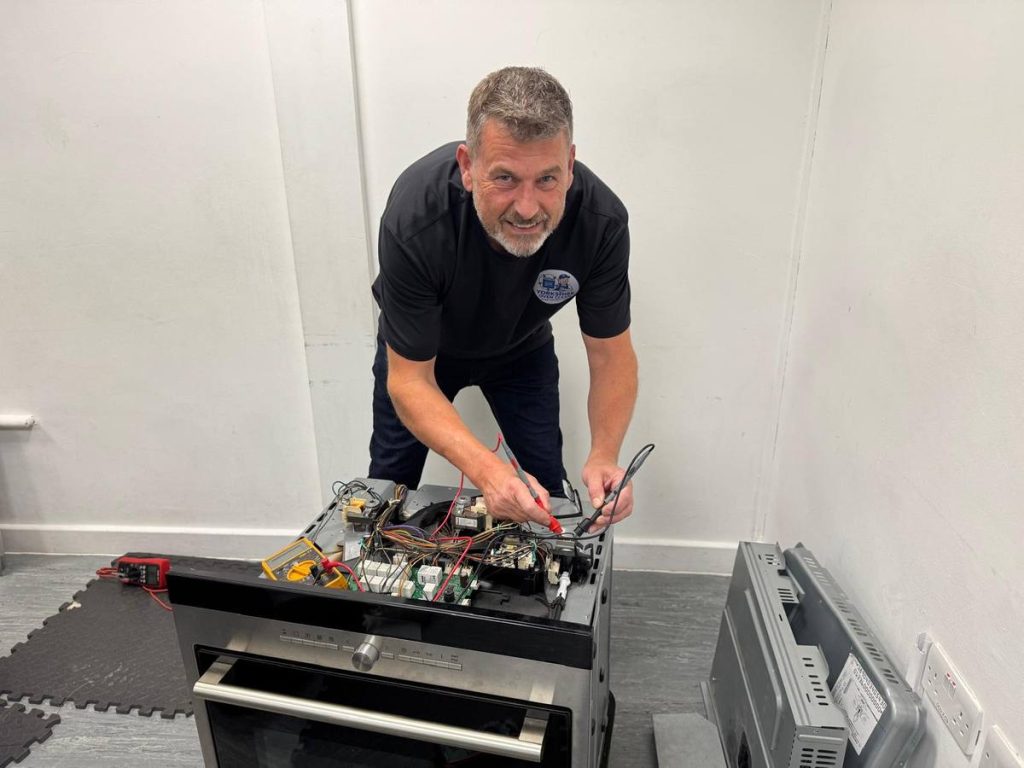
I’ve been cleaning ovens across Harrogate and North Yorkshire for almost a year now, and I’ve lost count of the times customers have asked me:
“While you’re here — any idea why the fan’s stopped?”
The truth is, I’ve spent 40 years in the motor trade as a fully qualified auto technician, covering everything from mechanical and vehicle repairs to auto electrics, air conditioning, vehicle alarm systems and ADAS.
I’ve always been hands-on — from diagnosing electrical faults to taking an engine to bits and putting it back together again. And thankfully, they usually ran afterwards!
I’ve also spent many years working on appliances, using those same mechanical and electrical skills to repair washing machines, ovens and more for myself, friends and family.
So moving into electric oven repairs felt like a natural progression — taking the experience I’ve built up over four decades and applying it to the ovens I’m already working on every day.
I often knew what I was looking at when customers asked about faults, but I wanted to back that practical experience up with specific formal training in electric oven repairs.
So, I went back to school and put that right.
Down to Essex for oven repair training
The course is run by Jonny Barr at JKL Oven Cleaning & Appliance Repair in Laindon, Essex. It’s a one-day CPD-accredited course covering the diagnosis and repair of electric ovens, and it’s limited to four trainees — which is exactly why I chose it.
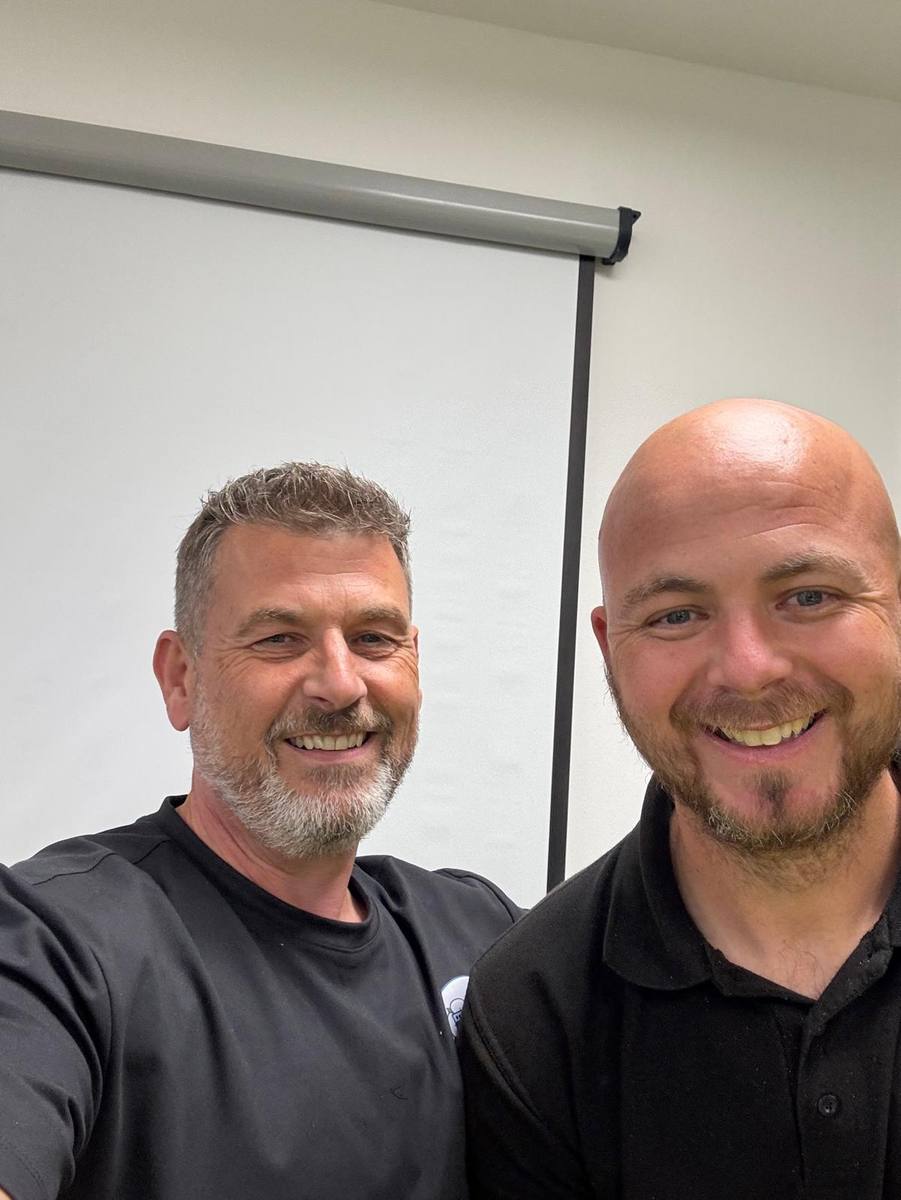
I didn’t want to sit at the back of a room of thirty people watching somebody point at a whiteboard. I wanted to get my hands on the ovens and actually learn how to diagnose the faults.
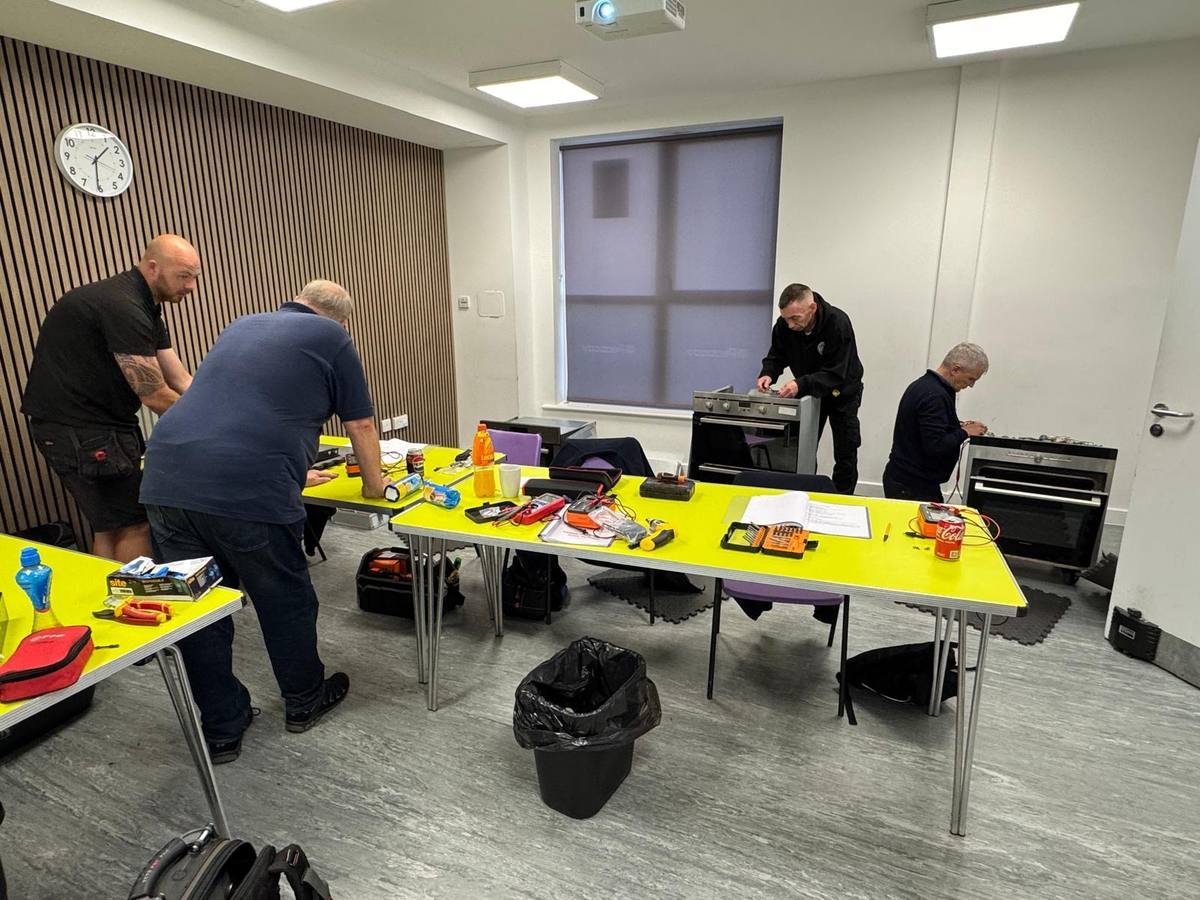
It was an early start and a fair drive down to Essex, but when I arrived it was obvious pretty quickly that this was going to be a hands-on day. There were only four of us on the course, which meant plenty of opportunity to ask questions and get involved.
And, importantly, there was a welcome cuppa and a few Hobnob biscuits before we got stuck in!
What we actually did
We started with something that is easy to overlook when you’re keen to get your hands on the tools — health and safety.
That covered not just working safely on the appliance but also risk assessment. If you’re going into somebody’s home to work on an oven, you have to consider your own safety as well as the safety of the customer and the environment you’re working in.
From there, we went back to basics with some electrical theory.
We covered things like cable colour coding, RCDs, current, amps, volts, power, conductors and insulators. We also refreshed the basics of Ohm’s law, worked through some calculations and covered how to wire a plug correctly.
You might wonder why you need to go back to that level of basics when the job is repairing ovens, but it all matters. It helped reinforce the difference between appliances that are hard-wired and those that are plug-wired and gave us the grounding needed before moving on to fault-finding.
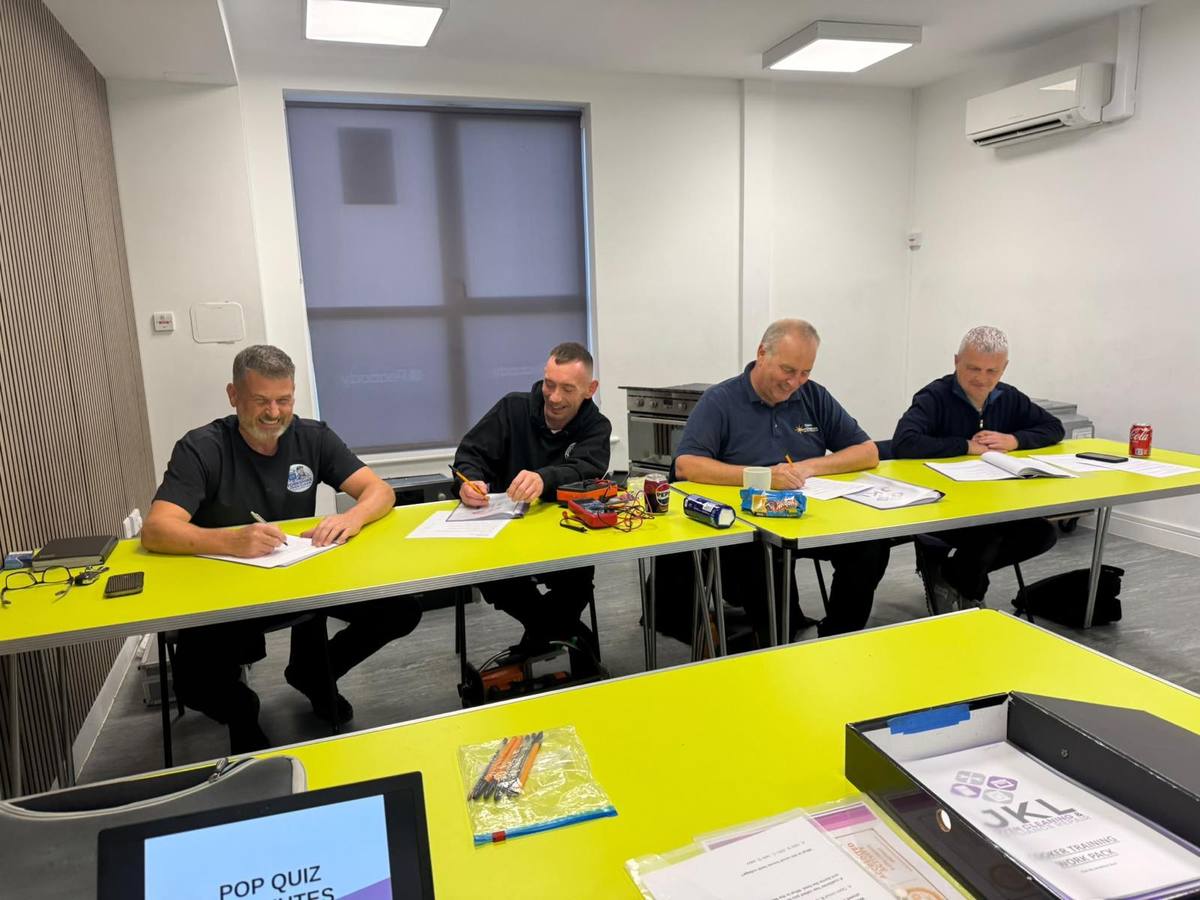
We then covered the major components that make an electric oven work, along with the different test equipment available for diagnosing faults and testing those components.
After the theory, it was time to get our hands dirty.
Getting hands-on
The practical side of the course covered a range of tests, starting with visual inspection and working through the correct testing process rather than simply guessing what might be wrong.
We covered cooker earth testing, voltage testing, continuity testing and insulation resistance testing.
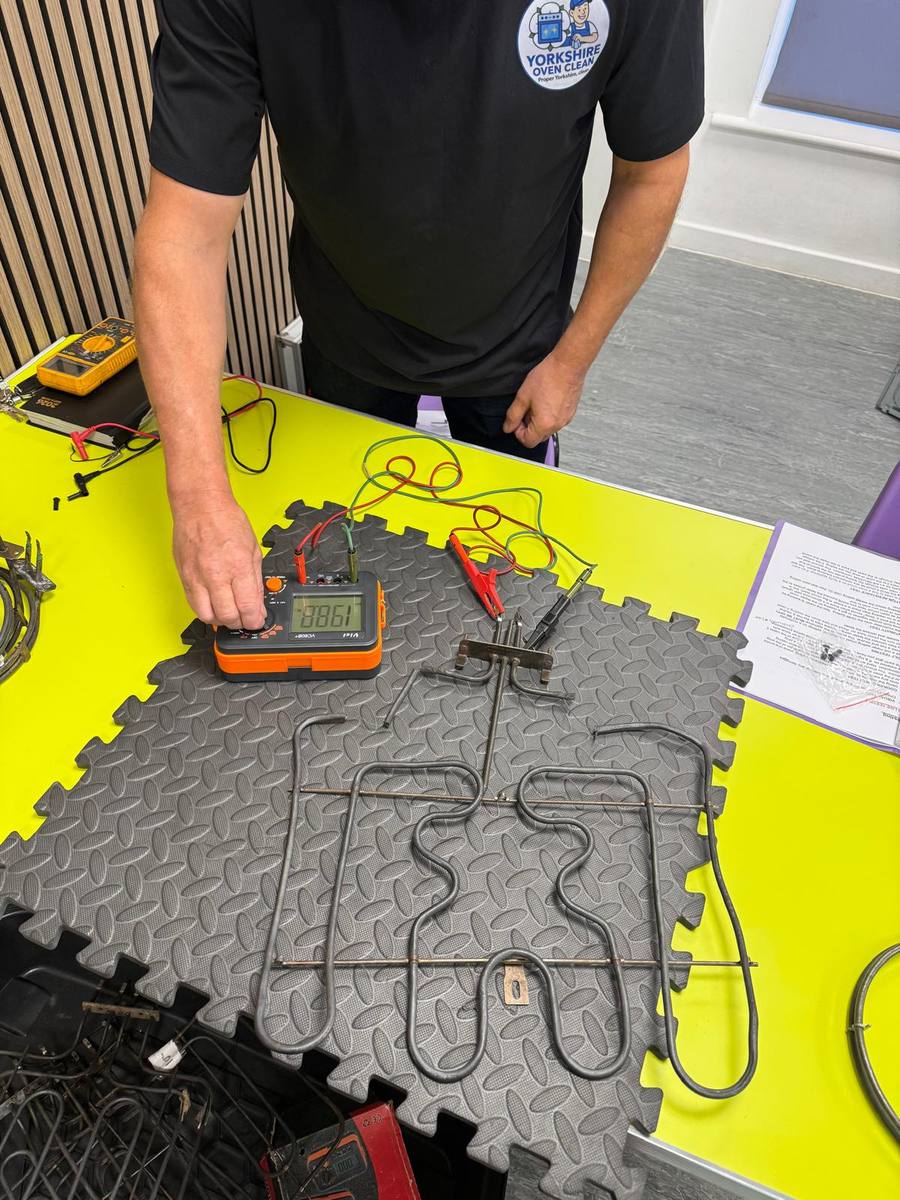
Two of the faults we worked through really stuck with me. The first was a heating element that had gone open circuit. A continuity test showed straight away that the circuit through the element was broken — which is exactly why the oven wasn’t getting hot.
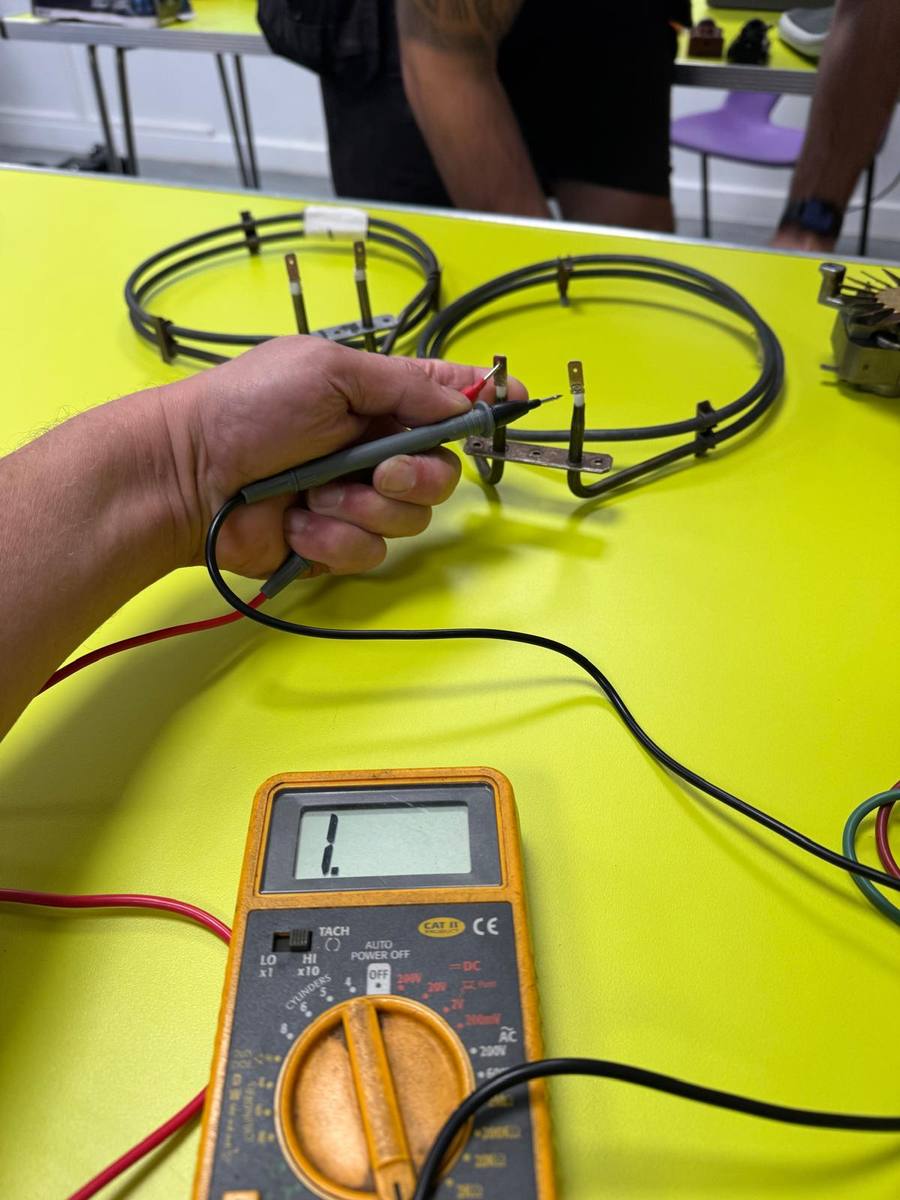
The second was the oven’s cooling fan not working. The oven still comes on, so it’s easy to miss, but without the cooling fan doing its job the oven was getting too hot while cooking.
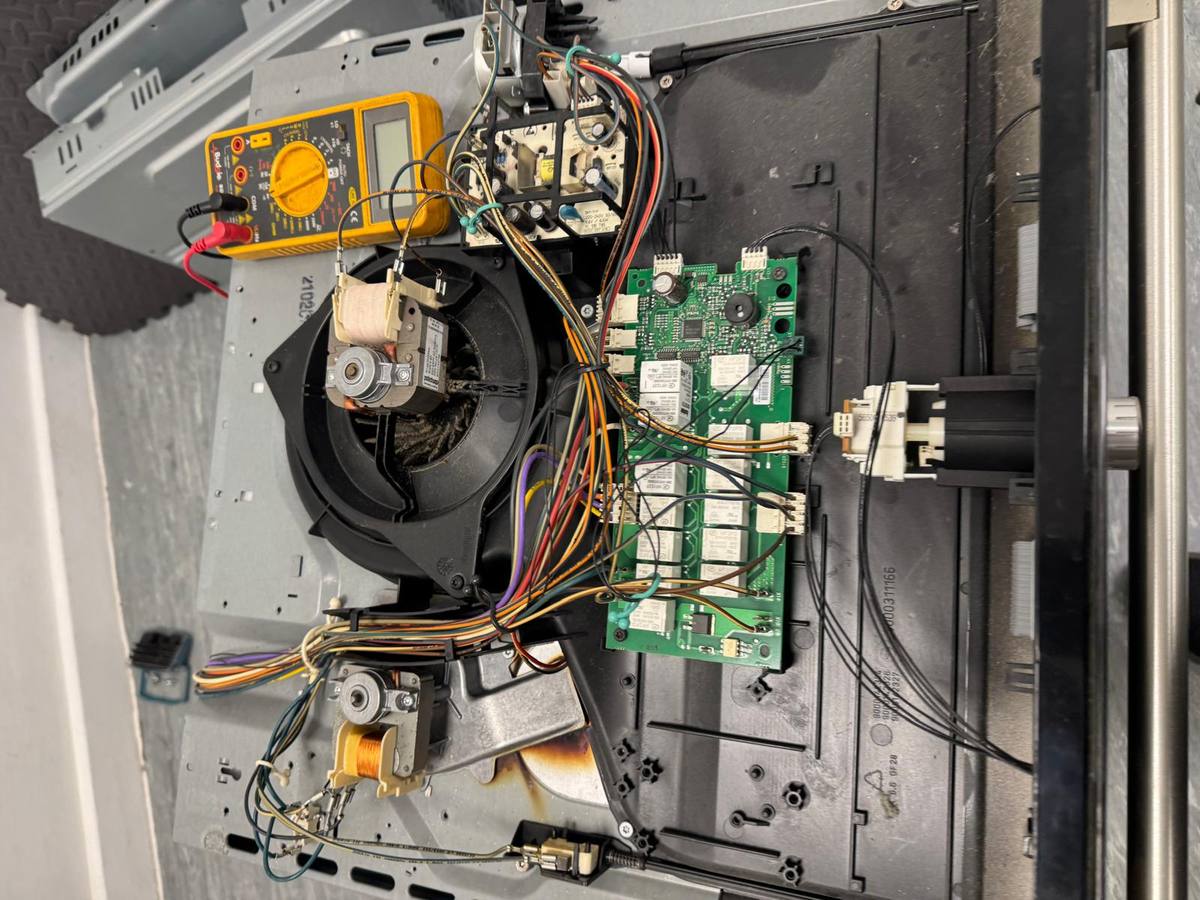
The ovens we worked on included Siemens, Bosch, Neff and Hotpoint, and we had to diagnose faults using the test equipment available to us.
That was probably the most useful part of the whole day.
There’s a big difference between somebody telling you that a component can fail and actually having an oven in front of you, a fault to find and a meter in your hand.
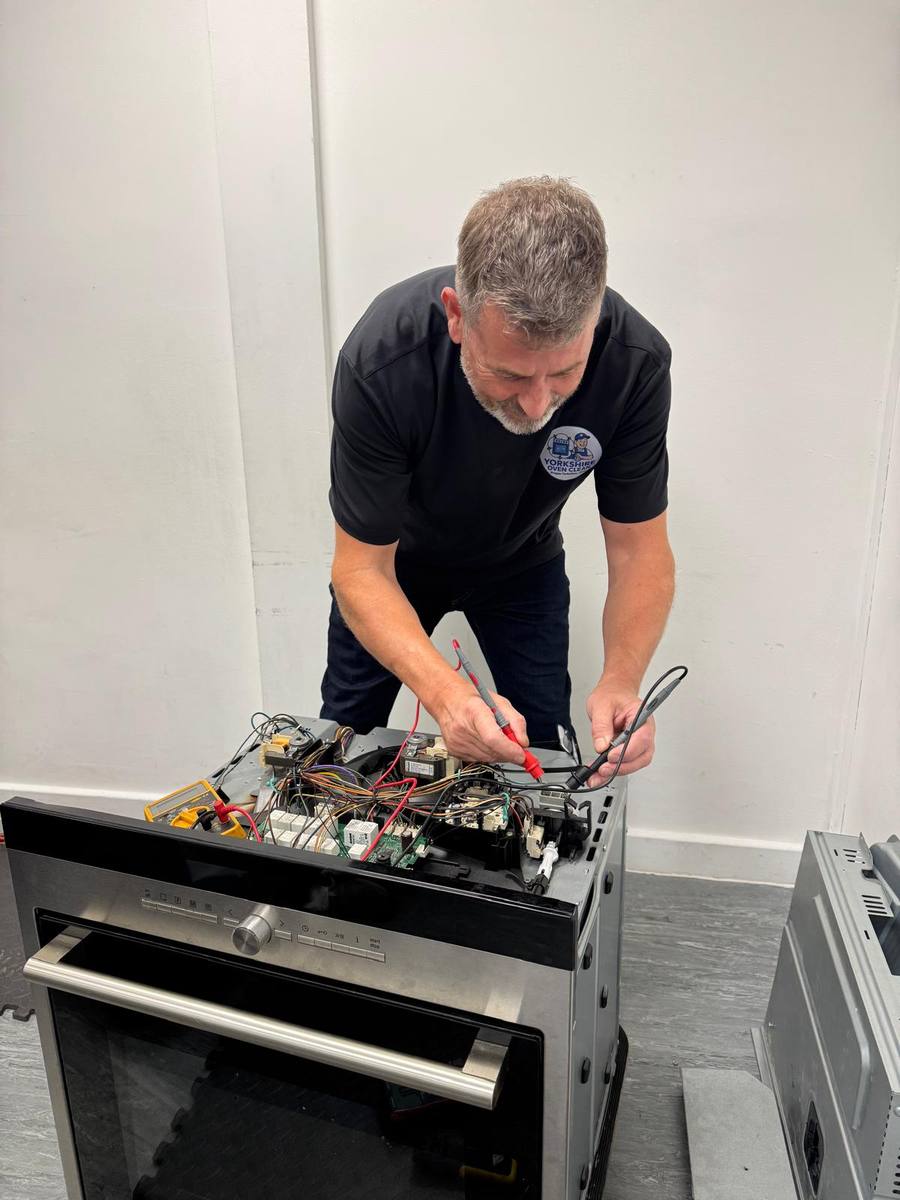
You have to work through the problem logically, carry out the right tests and eliminate the things that aren’t causing the fault.
And that was exactly what I wanted from the course.
The little things you don’t know you don’t know
One thing that caught me out took a bit of time to get my head around — the difference between a cut-in switch and a cut-out switch.
It sounds simple when you know it, but that was one of those things where I had to work through it properly. By the end of the course, I understood the difference and, more importantly, understood why it mattered when diagnosing a fault.
That was probably a good example of why I wanted to do the course in the first place.
Having experience around appliances is one thing. Having the knowledge and the correct process to diagnose an electrical fault safely and confidently is another.
What I took away from the day
Overall, I found the course really hands-on and informative.
It gave me the confidence and knowledge I wanted to move forward with diagnosing and carrying out repairs on electric ovens, rather than simply having a look and telling a customer they needed to call somebody else.
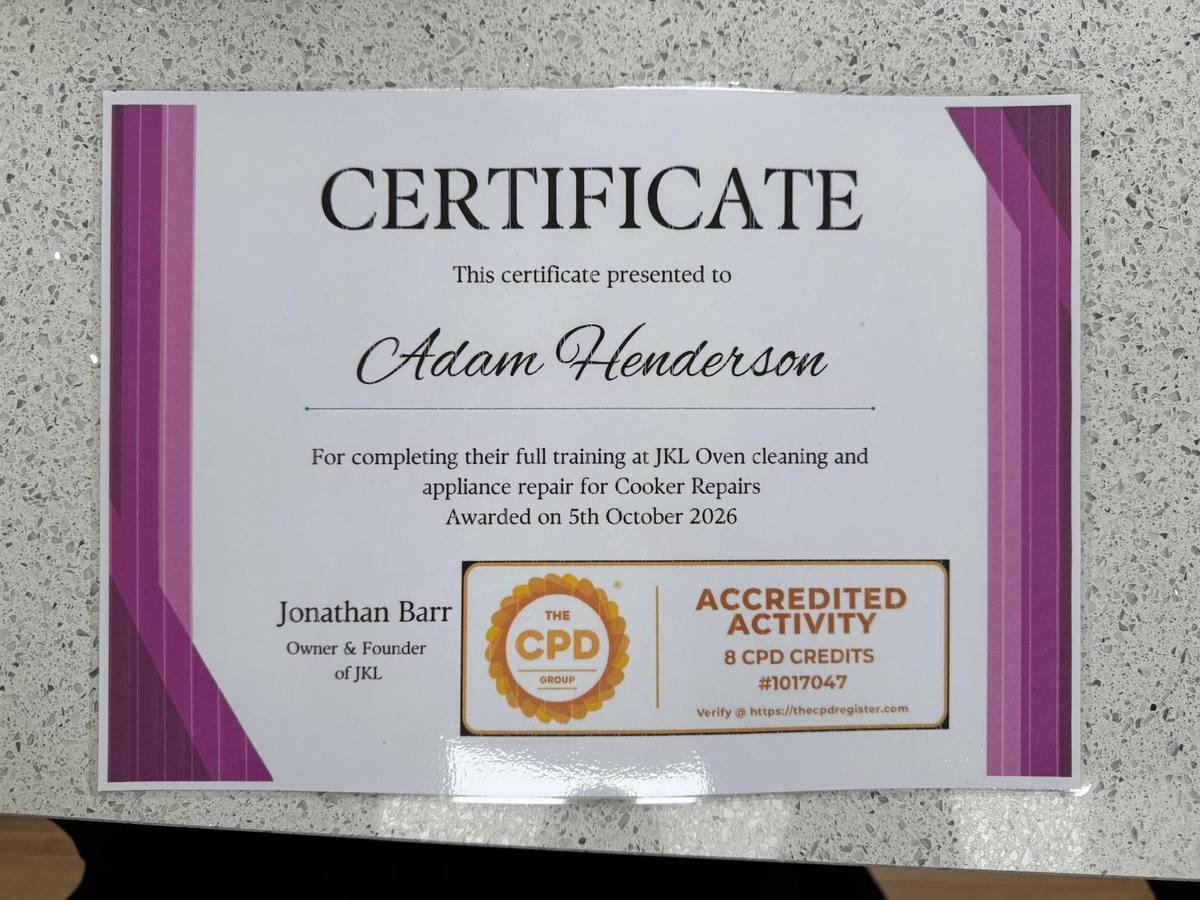
I also really like the fact that the training doesn’t just stop when you leave the course.
Jonny offers ongoing support after the course, so if I’m on a real job and come across something I’m not sure about, I still have access to his knowledge and experience.
That’s important to me. There’s a difference between learning something in a classroom and then applying it in a customer’s kitchen when you’re standing in front of the actual appliance.
Having that backup gives me another level of confidence as I start offering the service.
What surprised me
Two things.
The first is how much of fault-finding is about elimination rather than inspiration.
You’re not looking at an oven and magically knowing what’s wrong. You work through it in the right order, carry out the correct tests and gradually narrow it down until you find the fault.
The second is just how much there is to understand behind what looks like a fairly simple appliance.
When a customer turns the oven on and it doesn’t heat, there can be several different reasons why. Understanding the components, knowing what should be happening electrically and then being able to test each part properly is what turns a guess into a diagnosis.
What it means if you’re a customer
From October, alongside the cleaning, I’m offering electric oven repairs across North Yorkshire.
Let me be straight about what that does and doesn’t cover. It’s electric ovens only. I’m not Gas Safe registered, so anything involving a gas appliance needs a Gas Safe engineer — and I’ll tell you that rather than have a go at it.
What it does mean is that if your electric oven has stopped heating, the fan has packed in, the door glass has gone or the light is out, you can ring one person.
And if it needs a clean while I’m there, that’s the same visit rather than another appointment and another day off work.
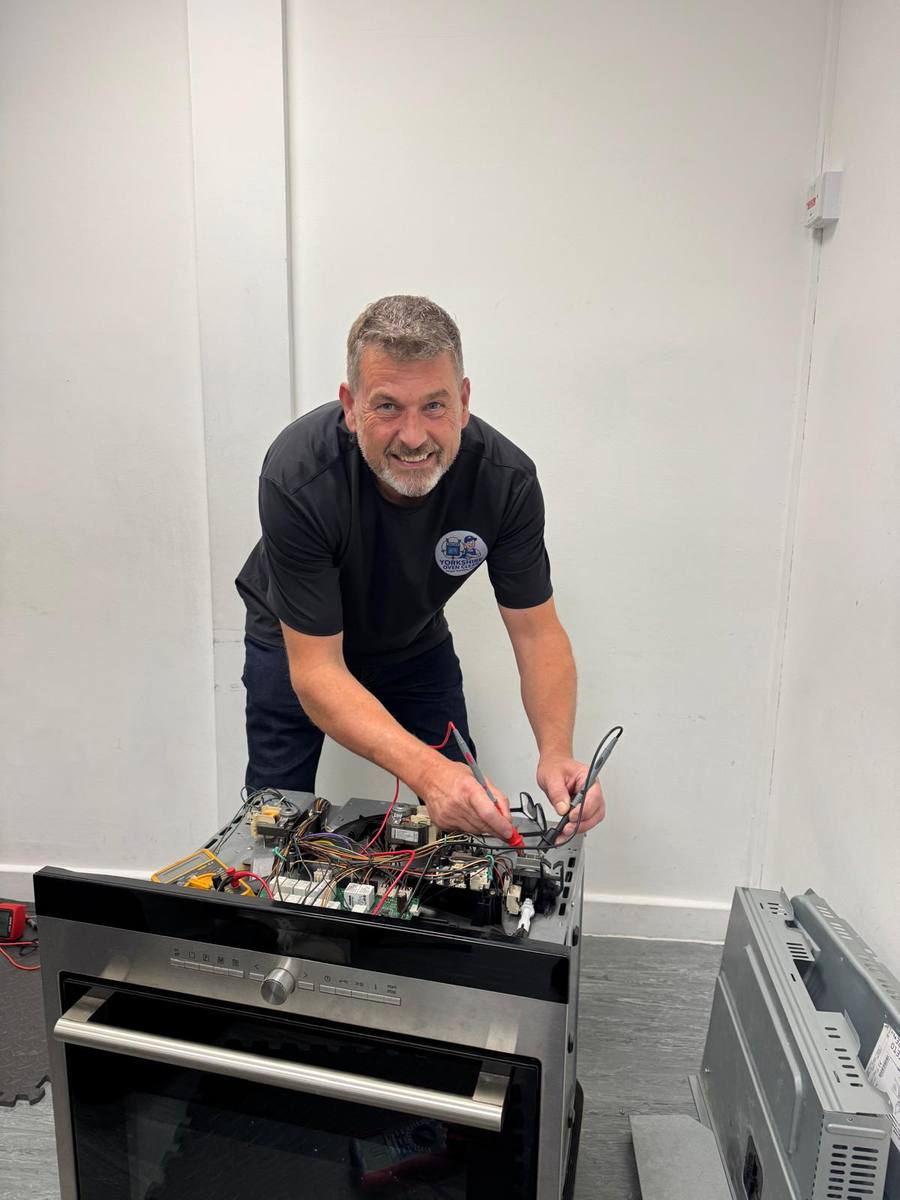
The same person who cleans it can now diagnose and repair it.
Same van, same number — I’ve just got a bit more in the back of it than I used to.
Got an oven that’s not working?
If your electric oven isn’t working properly, have a look at our electric oven repairs page or get in touch and tell me what it’s doing.
I’ll give you an honest answer on whether it’s worth repairing and, where possible, we’ll get you back up and running without the cost and hassle of replacing the whole appliance.
Adam · Yorkshire Oven Clean
01423 800788 · WhatsApp 07747 841610